San Antonio, TX & the surrounding area
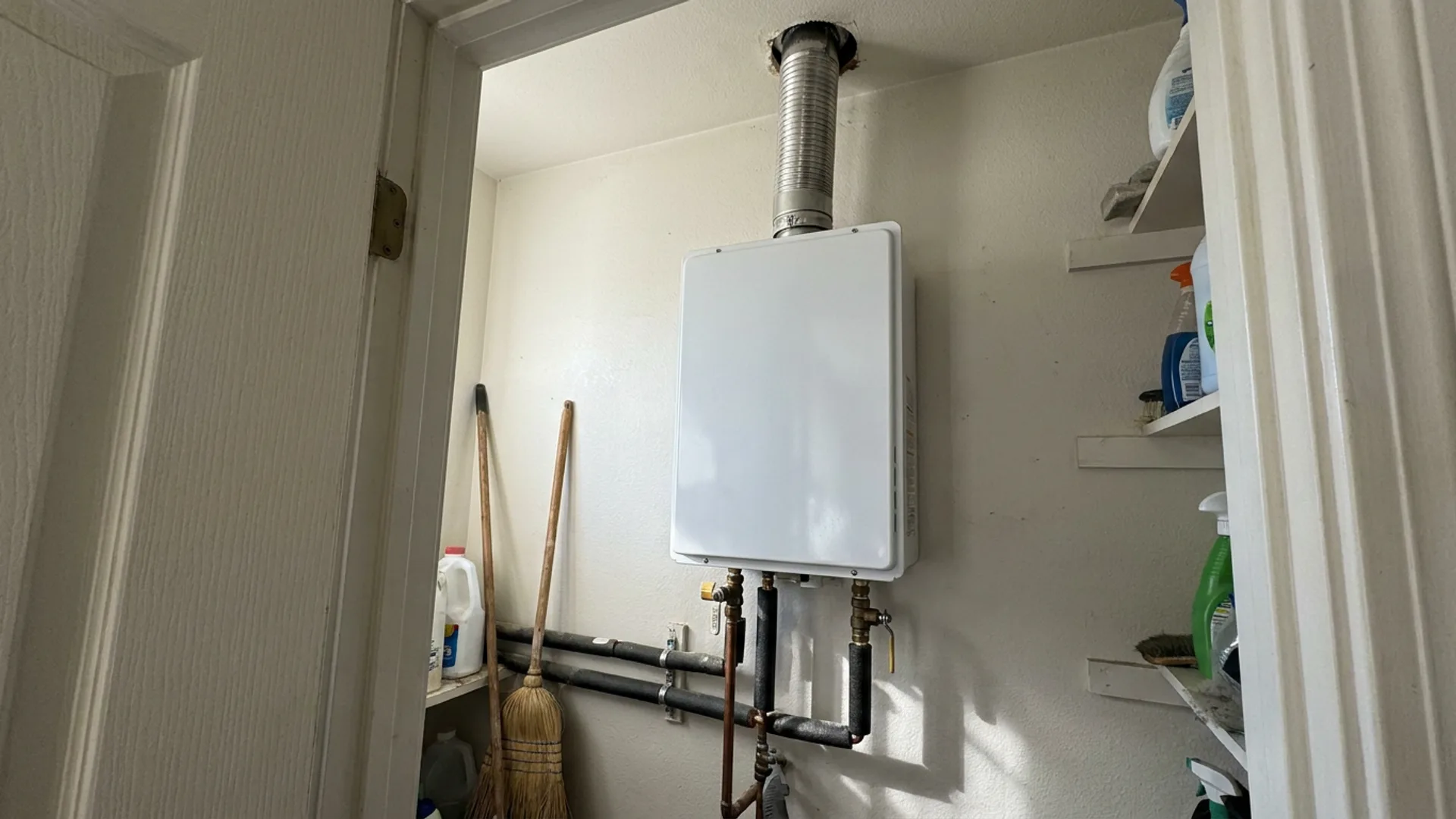
Tankless Water Heater Repair & Installation in San Antonio
Water Heater Repair San Antonio gets a licensed & insured local plumber to your doorstep for tankless water heater services, including repair, descaling, and installation. Free estimate, no obligation. Call (210) 767-9170.
- Free replacement estimate
- Insured local pro
- No obligation
Free Water Heater Estimate
A no-cost estimate, with no obligation to buy
Licensed, Insured Local Plumber
We connect you with one independent San Antonio-area business
Straight Repair-or-Replace Answers
Know which one you're actually looking at before you decide
Tankless heaters fail differently than tanks. There's no shell to corrode through, so you're rarely looking at a dead unit — you're looking at a component, and usually a symptom you can describe before anyone arrives.
- Error code on the display. Write it down. Every manufacturer publishes what theirs mean, and the code tells a plumber more than a paragraph of description.
- Hot, then cold, then hot. Classic scale restriction, or a flow sensor that's misreading how much water is moving through.
- Won't ignite. Igniter, flame rod, or gas supply. On a unit sharing a gas line with a furnace and a range, sometimes it's simply not getting enough gas.
- Lukewarm at high demand. The unit is at its flow-rate ceiling. That's a sizing issue, not a fault.
- Cuts out during long showers. Often overheating protection tripping because the heat exchanger is scaled.
Notice how many of those trace back to the same thing. Which brings us to the part that matters most in this city.
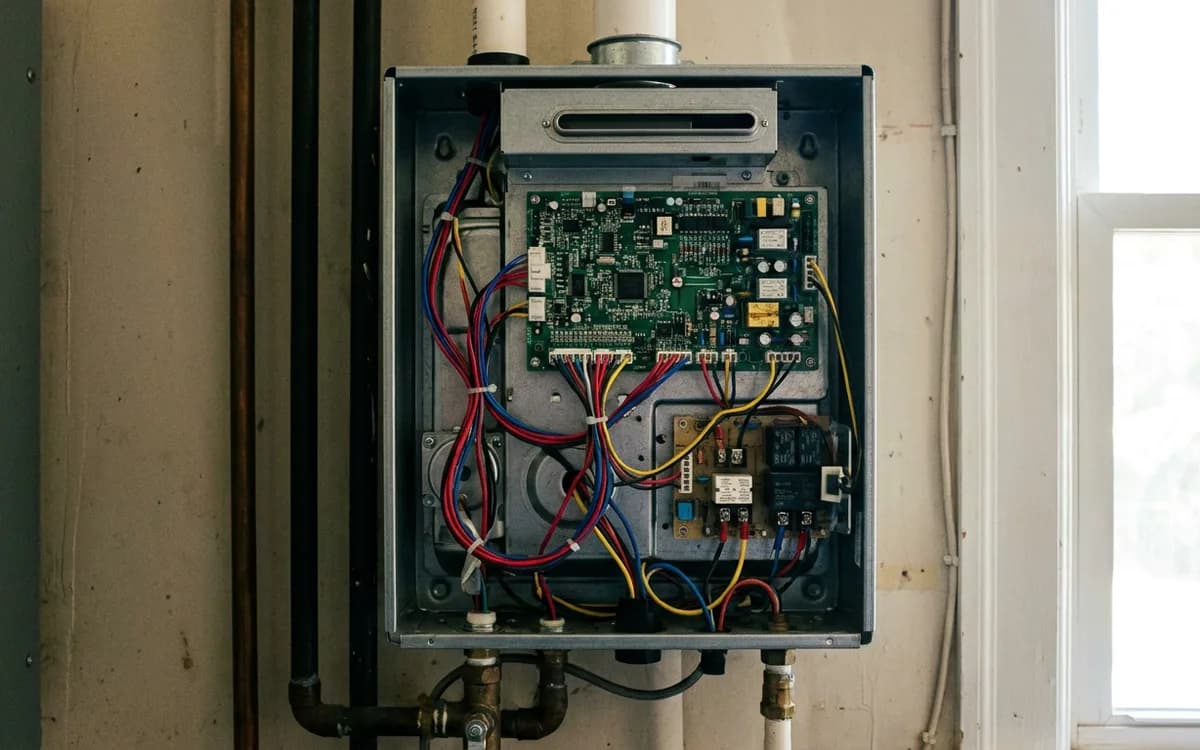
Descaling is not optional in this city
SAWS water runs 15 to 20 grains per gallon. Water is called "very hard" at 10.5, so we're at roughly double, and it's dissolved limestone from the Edwards Aquifer.
A tank water heater deals with that by dropping sediment to the bottom, where it sits and causes trouble slowly. A tankless unit has nowhere to drop it. Water passes through a narrow heat exchanger at high temperature — the exact conditions that make minerals plate onto the walls. As that layer builds, flow restricts, the unit works harder to hit the same output temperature, and eventually the safety cuts in.
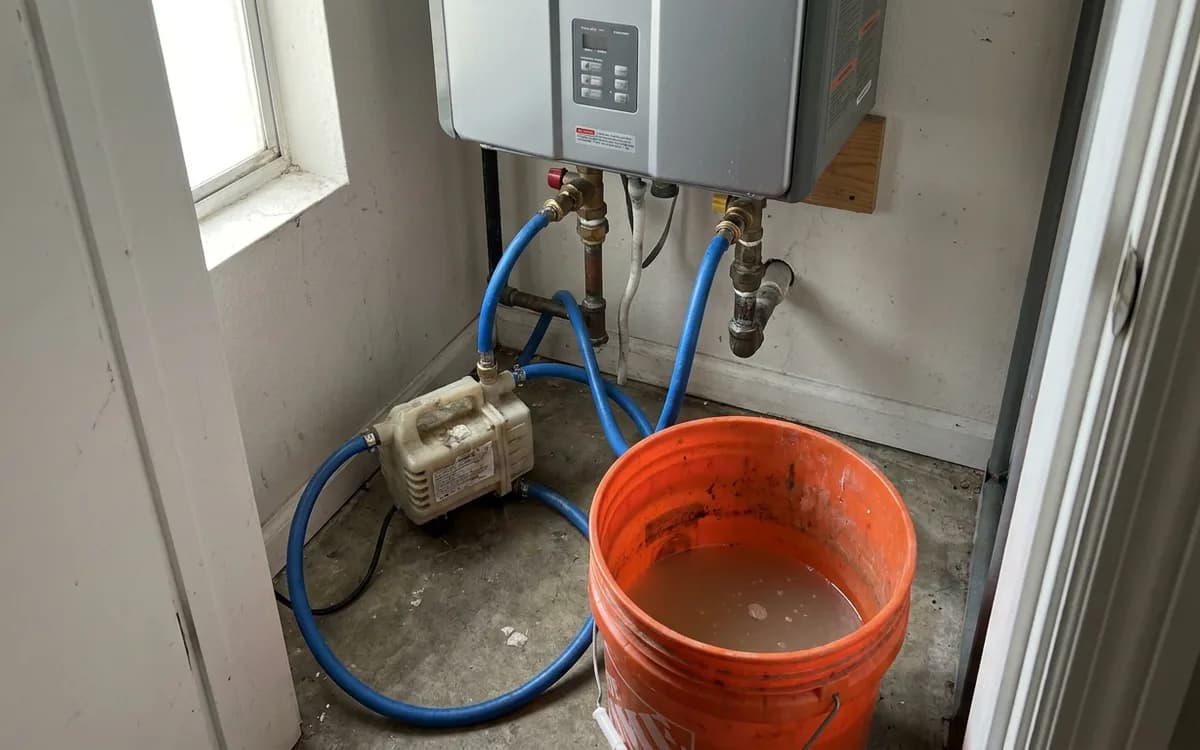
So in San Antonio, descaling once a year is part of owning one. A plumber circulates a descaling solution through the heat exchanger using the isolation valves; it takes about an hour. If your unit was installed without those service valves, adding them is the first thing worth doing, because their absence makes every future descale more expensive.
This is the honest catch nobody mentions in the showroom. Tankless costs more up front, lasts nearly twice as long, and only reaches that lifespan if somebody maintains it. If that maintenance is not going to happen, a tank is the more forgiving machine — and there's no shame in choosing the forgiving machine. More on the underlying chemistry in how hard water affects San Antonio water heaters.
What tankless repair costs
| Job | Typical cost |
|---|---|
| Annual descaling service | $150 – $300 |
| Flow sensor or igniter | $200 – $500 |
| Control board replacement | $400 – $900 |
| Adding isolation service valves | $200 – $400 |
Tankless repairs run higher than tank repairs for two reasons that aren't going away: the parts genuinely cost more, and fewer plumbers in any given market are trained and stocked for them. Ask whether the plumber services your brand specifically — Rinnai, Navien, Rheem and Noritz all have their own quirks, parts channels, and diagnostic codes.
The upside is that repair is almost always the right call. A tankless unit is modular. When a tank's steel shell corrodes through, the machine is finished; when a tankless component fails, you replace the component and keep a unit that has years left.
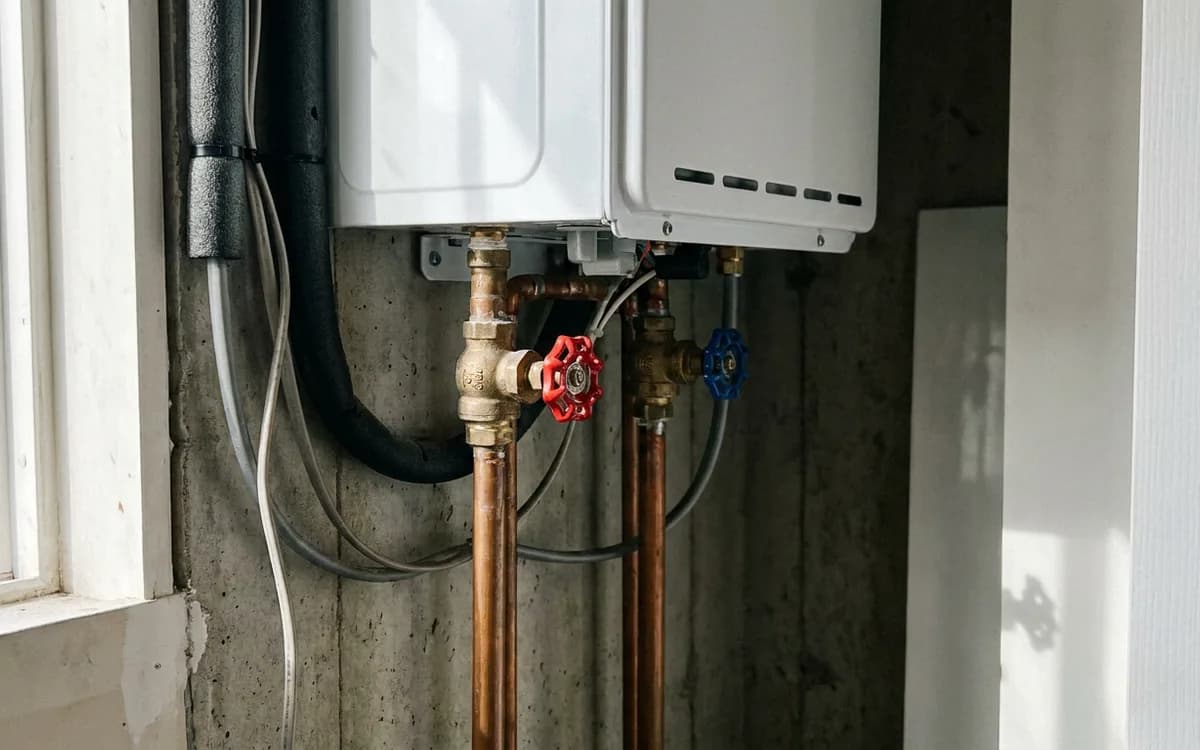
What installation actually involves
Going tank-to-tankless is not a swap, and the honest price reflects real work:
- Gas line. A whole-house gas tankless often needs the supply stepped from half-inch to three-quarter. It burns far more gas than a tank — in short bursts rather than continuously, but the line has to carry the peak.
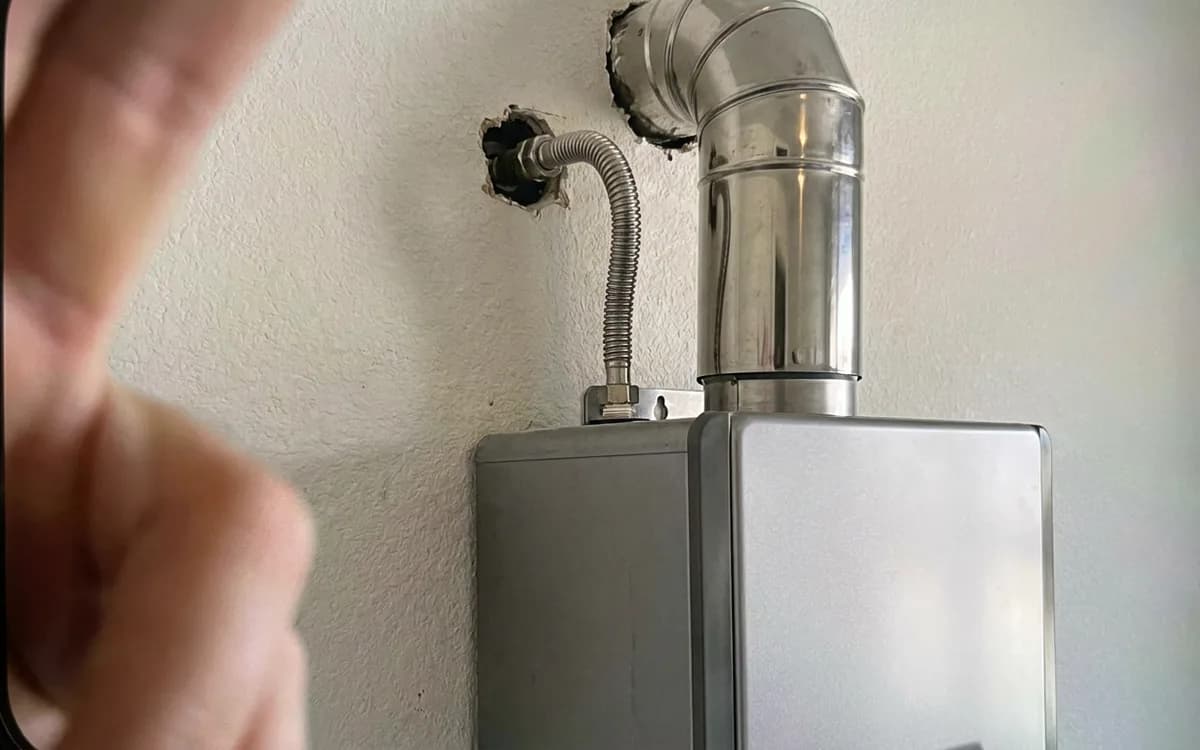
- Venting. Tankless units need their own sealed venting, typically stainless or PVC depending on the model. The old tank's chimney flue usually can't be reused.
- Electrical. Gas tankless needs a nearby outlet for its controls. Whole-house electric tankless is a different scale entirely — often a 200-amp panel and multiple 40-amp breakers, which is why a panel upgrade sometimes lands in the quote.
- Condensate. High-efficiency condensing models produce acidic condensate that needs a drain and often a neutralizer.
That's why local pricing runs $4,500 to $10,000 for tankless against roughly $2,100 to $2,700 for a tank. The equipment gap is real but modest; the difference is the infrastructure.
When tankless is the wrong answer
We'd rather talk you out of it than sell you one you'll regret.
Tankless is a poor fit when you're replacing a failed tank in an emergency and need hot water tonight — the conversion takes longer and costs triple. It's a poor fit if the maintenance won't happen. It's a poor fit if your household's real problem is running out of hot water occasionally, which a larger tank solves for a quarter of the money. And whole-house electric tankless is a poor fit in most older San Antonio houses simply because the panel can't carry it.
Tankless earns its money when you're planning ahead rather than reacting, when floor space in a small utility closet is worth something, when the household genuinely draws hot water in long or overlapping sessions, and when you intend to stay in the house long enough for a fifteen-to-twenty-year unit to pay back a higher install.
The equipment vocabulary worth knowing: flow rate in GPM is how many gallons per minute the unit can heat, and it's the real sizing number; temperature rise is how far the unit must lift incoming water to reach your setpoint, and it caps your usable flow; modulating burner means the unit throttles its flame to match demand rather than running full-tilt; condensing models capture heat from their own exhaust for higher efficiency; and cold-water sandwich is the brief cold slug you feel when the unit restarts between draws.
Call (210) 767-9170 or send the form for a free estimate on tankless repair, descaling, or installation. If a tank replacement is the likelier answer, water heater replacement in San Antonio has those numbers.
Questions
Frequently Asked Questions
How much does it cost to repair a tankless hot water heater?
More than a tank, usually. Tankless repairs run higher because parts cost more and fewer plumbers are trained on them — a control board replacement alone lands around $400 to $900. Simpler work like a flow sensor, igniter, or a descaling service is far less. Get the error code off the display before you call; it narrows the diagnosis and the price conversation considerably.
What is the most common problem with tankless water heaters?
Scale, and in San Antonio it isn't close. Our water runs 15 to 20 grains per gallon, and a tankless unit heats water by pushing it through a narrow heat exchanger — exactly the geometry that mineral scale clogs fastest. Restricted flow, fluctuating temperature, and error codes for overheating usually trace back to a unit that hasn't been descaled.
Can a tankless water heater be repaired?
Yes, and it's usually worth it. Tankless units are modular in a way tanks aren't — igniters, flow sensors, control boards, and heat exchangers are individually replaceable, and the unit is built to last 15 to 20 years. A tank with a corroded shell is scrap; a tankless with a failed part is a repair. That changes the repair-or-replace math in tankless's favor.
What's the average lifespan of a tankless hot water heater?
Fifteen to twenty years, against eight to twelve for a tank. That gap is the main financial argument for tankless. It assumes maintenance though — in water as hard as ours, a unit that never gets descaled won't reach the low end of that range.
Is tankless worth it with San Antonio's hard water?
It can be, but go in knowing the deal. Hard water doesn't rule tankless out, it just makes annual descaling non-negotiable rather than optional. Many homeowners here pair a tankless install with a softener, which protects the unit and everything else fed by the line. If you won't keep up the maintenance, a tank is the more forgiving choice.
How much does tankless installation cost in San Antonio?
Whole-house gas tankless commonly starts around $4,100 installed, and electric runs $2,500 to $4,000 but needs serious panel capacity. Jon Wayne quotes a $4,500 to $10,000 range locally for tankless, the top end reflecting gas line upgrades and new venting. A point-of-use unit for one distant fixture is far cheaper at $500 to $1,200.
Ready to get started?
Get connected with one local, licensed and insured plumber. A straight answer on repair or replace, a real number, and no obligation to buy.