San Antonio, TX & the surrounding area
Water Heater Permits and Code Rules in San Antonio
Water Heater Repair San Antonio gets a licensed & insured local plumber to your doorstep for water heater work that may require a permit. Call (210) 767-9170 for a free estimate. This page explains when a permit may be required.
- Free replacement estimate
- Insured local pro
- No obligation
Free Water Heater Estimate
A no-cost estimate, with no obligation to buy
Licensed, Insured Local Plumber
We connect you with one independent San Antonio-area business
Straight Repair-or-Replace Answers
Know which one you're actually looking at before you decide
Yes. Water heater replacement is permitted work in San Antonio.
It surprises people, because a water heater feels like an appliance — you buy one at a big-box store, so how different can it be from a dishwasher? The answer is that it's a pressure vessel connected to either a gas line or a 240-volt circuit, venting combustion byproducts in most cases, and sitting inside your house. The permit exists because of those three things.
The permit runs roughly $50 to $150, and your plumber pulls it. On a job costing $2,100 or more, that's a rounding error — which is why the offer to skip it should worry you rather than appeal to you. Someone willing to skip the inspection on the part that vents combustion gas is telling you how they handle the parts you can't see.

Who is allowed to do the work
Texas is clearer about this than many states.
The Texas State Board of Plumbing Examiners licenses every plumber in the state. There are four license types — Tradesman Plumber-Limited, Journeyman, Master, and Plumbing Inspector — each renewed annually, each requiring continuing education. Water heater work is plumbing work, so it requires a license. There's no ambiguity about whether the person in your garage should hold one.
San Antonio adds a registration step. Before a plumber can pull a permit here, they must register their State Master Plumber License with the city's Development Services department. Registration is free, renewed annually, and requires a government photo ID, the state license card, and current insurance on file with the state board. That last requirement is quietly the most useful consumer protection in the whole arrangement — a plumber who can pull your permit has demonstrably current insurance.
So a handyman is out. Not because handymen lack skill, but because they can't pull the permit and the work is legally reserved.
Two questions cover this at the estimate: What's your TSBPE license number? and Are you pulling the permit, and is it in this price? Anyone doing this weekly answers both instantly. You can verify the license yourself on the state board's public lookup before anyone starts.

What Texas code requires on a replacement
A swap has to meet current code, not the code that existed when the old unit went in. The items that most often catch older installations:
- Thermal expansion tank. Required by Texas code on a replacement. Heated water expands; on a closed system it has nowhere to go, and the pressure cycles against the relief valve and tank seams. Small part, real function.
- T&P discharge line. The temperature and pressure relief valve needs a properly sized discharge pipe terminating where a release is visible and won't scald anyone. Terminating it into a closed drain, or leaving it capped, is a serious defect.
- Drain pan and drain line where a failure would damage the building — attic and interior-closet installations especially.
- Combustion air and clearances for gas units. The appliance needs air to burn and space around it to be serviced.
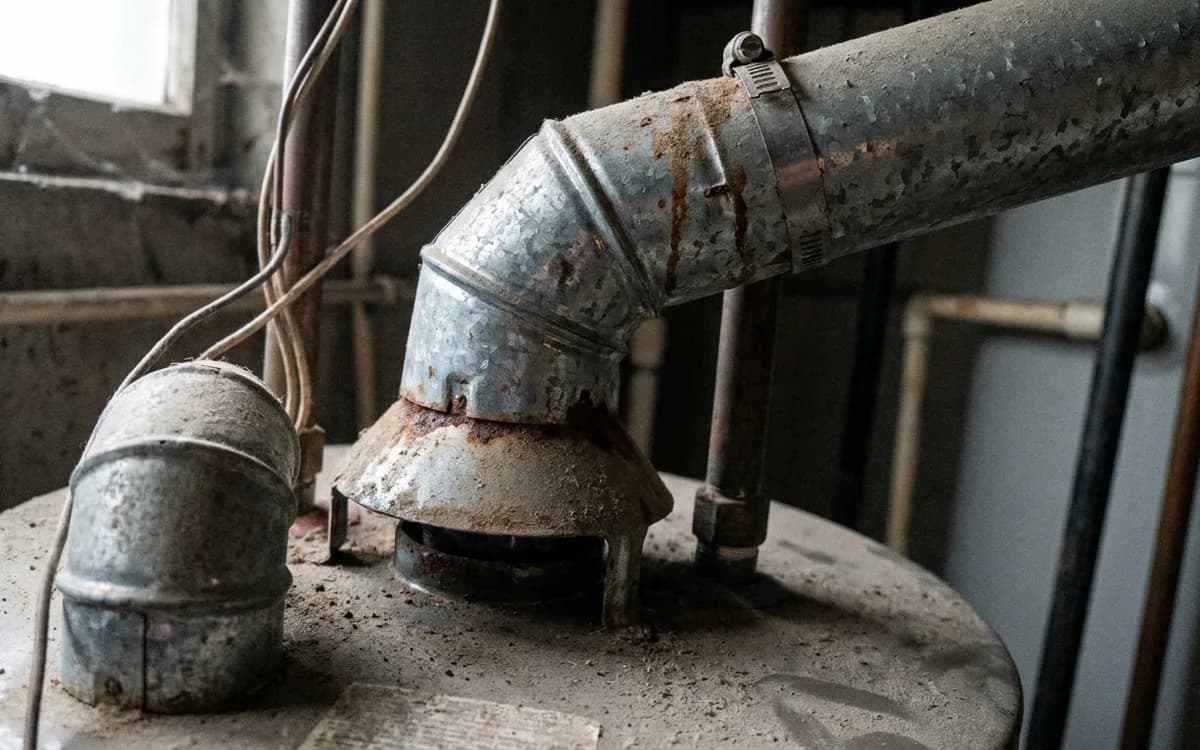
- Proper venting. Correct diameter, correct slope, correct materials, correctly connected at the draft hood.
- Seismic or securing straps where required by local amendment.
None of these are upsells. They're the difference between an installation that passes and one that doesn't, and they're a genuine reason a permitted install costs more than a guy with a truck.
What the inspector checks
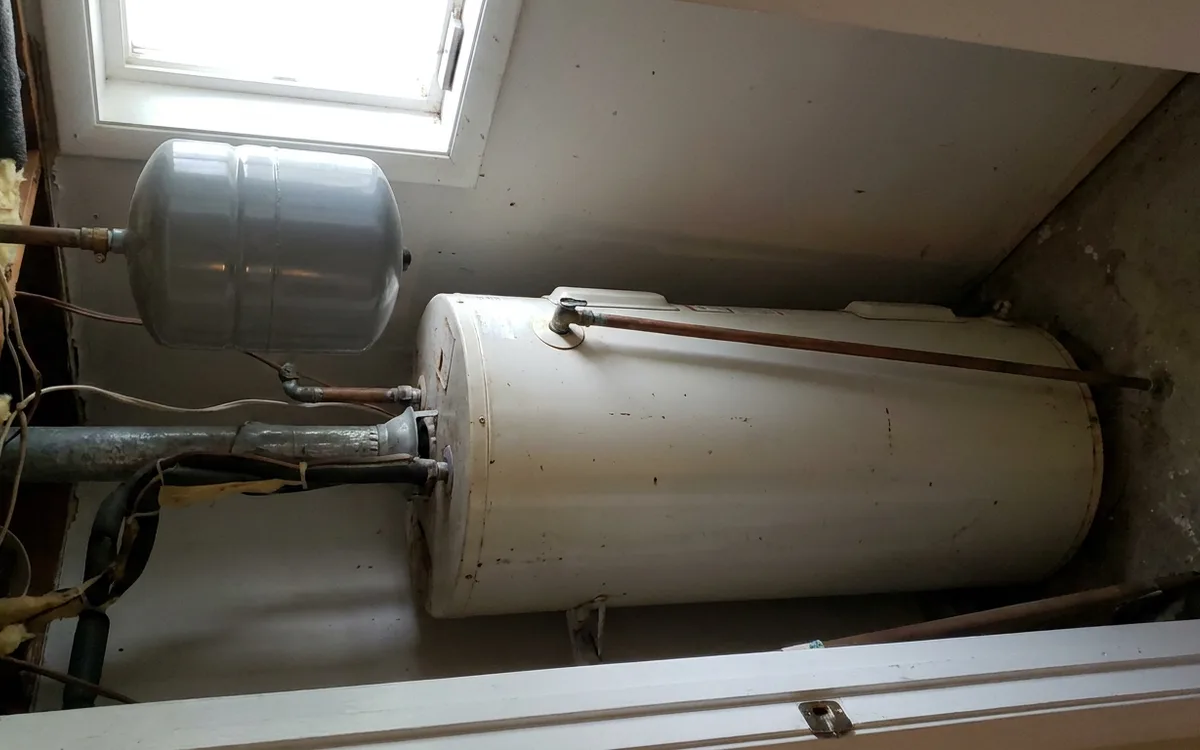
The inspection is not adversarial and it's not long. An inspector is confirming a short list: that the unit is the right appliance properly supported and secured, that gas or electrical connections are correct and accessible, that the venting is right, that the T&P valve and its discharge line are correct, that the expansion tank is present and on the correct line, that clearances allow service, and that any required pan and drain are in place.
Your plumber schedules it and meets them. Your job is to be home and let them look.
Why unpermitted work follows you
The temptation is understandable. Someone quotes a few hundred less, says the permit is a formality, and the heater works fine either way. And for a while, it does.
Where it surfaces:
- Selling the house. A buyer's inspector notices a newer water heater with no permit record, and it becomes a negotiating point or a condition of closing.
- An insurance claim. Water damage from a failed heater invites the question of whether the installation was permitted and code-compliant.
- A future permit. Applying for anything else can turn up the unpermitted work.
- Warranty. Manufacturers frequently void coverage on installations that weren't done by a licensed installer.
The remedy is a retroactive permit and inspection, which costs more than doing it properly and sometimes means opening up finished work to bring it current.
The relevant terminology, so a contractor can't wave it past you: T&P valve is the temperature and pressure relief device; thermal expansion is the volume increase when water is heated in a closed system; draft hood is the fitting where a gas unit's flue gases enter the vent; backflow prevention on the supply is what makes a system "closed" and therefore requires the expansion tank; and first-hour rating is the delivery figure inspectors and installers use rather than raw tank gallons.
Call (210) 767-9170 for a free estimate from a plumber who pulls the permit as part of the job. Water heater replacement in San Antonio covers what a compliant swap costs, and the cost guide breaks the whole bill out line by line.

Questions
Frequently Asked Questions
Do I need a permit to replace a water heater in San Antonio?
Yes. Water heater replacement is permitted plumbing work in San Antonio, and your plumber pulls the permit. They can only do that if they've registered their state license with the city's Development Services department first. If a quote doesn't mention the permit, ask — its absence usually means the job is being done without one.
Can a handyman install a water heater in Texas?
No. Texas licenses plumbers through the Texas State Board of Plumbing Examiners, and water heater installation is licensed plumbing work. A handyman cannot legally pull the permit San Antonio requires. Beyond the legal question, gas connections and venting are the failure modes that hurt people rather than just costing money.
Can a homeowner pull their own water heater permit?
Texas law does allow a property owner to perform plumbing work on their own homestead, subject to local requirements — and San Antonio's own residential permitting process exists for homeowners. It still gets inspected to the same standard. Check directly with Development Services before starting, and know that a manufacturer's warranty is frequently void on a self-installed unit.
What is an expansion tank and why do I need one?
It's a small pressurized vessel on the cold water inlet that gives heated water somewhere to expand into. Texas code requires one on a water heater replacement. Without it, expansion pressure works against the relief valve and the tank seams every heating cycle. It's an inexpensive part and it belongs in your quote.
How much does a water heater permit cost?
Typically $50 to $150 depending on the municipality. It's a small line on a $2,000-plus job, which is exactly why skipping it is a bad trade — you save a hundred dollars and inherit an unpermitted gas appliance that shows up when you sell.
What happens if my water heater was installed without a permit?
Usually nothing, right up until it matters. Then it's a buyer's inspection, an insurance claim after water damage, or a future permit application that surfaces it. The fix is a retroactive permit and inspection, which costs more than doing it right and occasionally means redoing work to current code.
Ready to get started?
Get connected with one local, licensed and insured plumber. A straight answer on repair or replace, a real number, and no obligation to buy.